
The time to lock in is over. It’s now time to lock out.
Not locked out of your place of residence, that would be wildly inconvenient. But a jailbreak from the capitalist prison of the mind: burnout.
For those feeling trapped in the monotony of an endless cycle of exhaustion, moving through their days with the low‑grade dread of a haunted house: corridors of emails, doors that creak open into deadlines, the sense that something is always chasing you, believe me on this, you’re not alone. The systems feel inescapable by design, clenching us in their vice‑like grip, convincing us that rest must be earned, optimised, and monetised.
Even attempting relaxation in this hyper‑intense state is no use, because rest is sold back to us, packaged up as productivity in disguise. Everything becomes an end goal. Sleep to work better. Meditate to cope. Holiday, but only briefly, like really not for long, please come back ASAP, before returning refreshed and compliant, bouncing back to full battery.
True relaxation cannot exist solely to offset stress induced by capitalist work practices. You are not here to optimise yourself into a better‑functioning cog in the wheel.
True relaxation is resistance. It lives in the visceral act of coming back to the body, rediscovering the senses and remembering that the nervous system was never designed for constant urgency, performance metrics, or digital surveillance. It was designed to feel the ground with your bare feet and let sensation lead the way again.
In other words: it’s time to go outside and touch some grass.
This guide is not about shortcuts, hacks, or throwing money at the problem. It’s about tapping into ancestral wisdom and reshaping how we see time and value. It’s about relearning slowness, something our bodies remember, even if our fast paced heads are speeding by, forgetting what it’s like to move with ease.
1. Kill the capitalist boss in your head
Start with your thoughts.
You have to stop feeling guilty for stopping, for resting and for being unproductive. You cannot begin to unwind from a place of guilt and stress. Redefine what relaxation means. It isn’t always calm, zen, silent, or perfectly aesthetic. Sometimes it simply means letting the body decide.
What would your body want to do if it wasn’t being monitored, timed, or performance‑managed?
Like maybe crying when you need to cry. Lying on the floor, staring at the ceiling. Walking with no destination. Being bored without reaching for your phone. Saying no without explanation.
Rest shouldn’t feel like another task on a to‑do list. It should feel like total surrender.
Let it be.
2. Turn off the clock
Stop measuring everything you do.
Retire the parking watches for the summer holiday. Sleep without counting hours. Forget what time it is. Don’t document your rest. Stop checking the clock while meditating. Do it imperfectly, sans all the metrics and the analysis.
Disappear from the dashboard of your own life. Be a person in the world again.
3. From nervous system to calm system
Constant interruption makes it impossible to fully unwind.
Give yourself over to the moment. Let your nervous system know you’re safe.
- Go to the cinema alone and turn your phone off
- Keep your phone away from the bed so the morning isn’t disrupted by news
- Have one screen‑free hour a day
- Ditch overhead lighting and let lamps soften the evening
- Focus on your breathing more, be in the present
- Try really listening to a conversation, tuning everything else out around you
When time stretches and contorts into new shapes, the body gets the signal that it can finally let go.
4. Prioritise pleasure, dial down the stimulation
Capitalism confuses intensity with joy.
To truly unwind, seek pleasures that are easy, sensory, slow, repetitive, and gloriously useless:
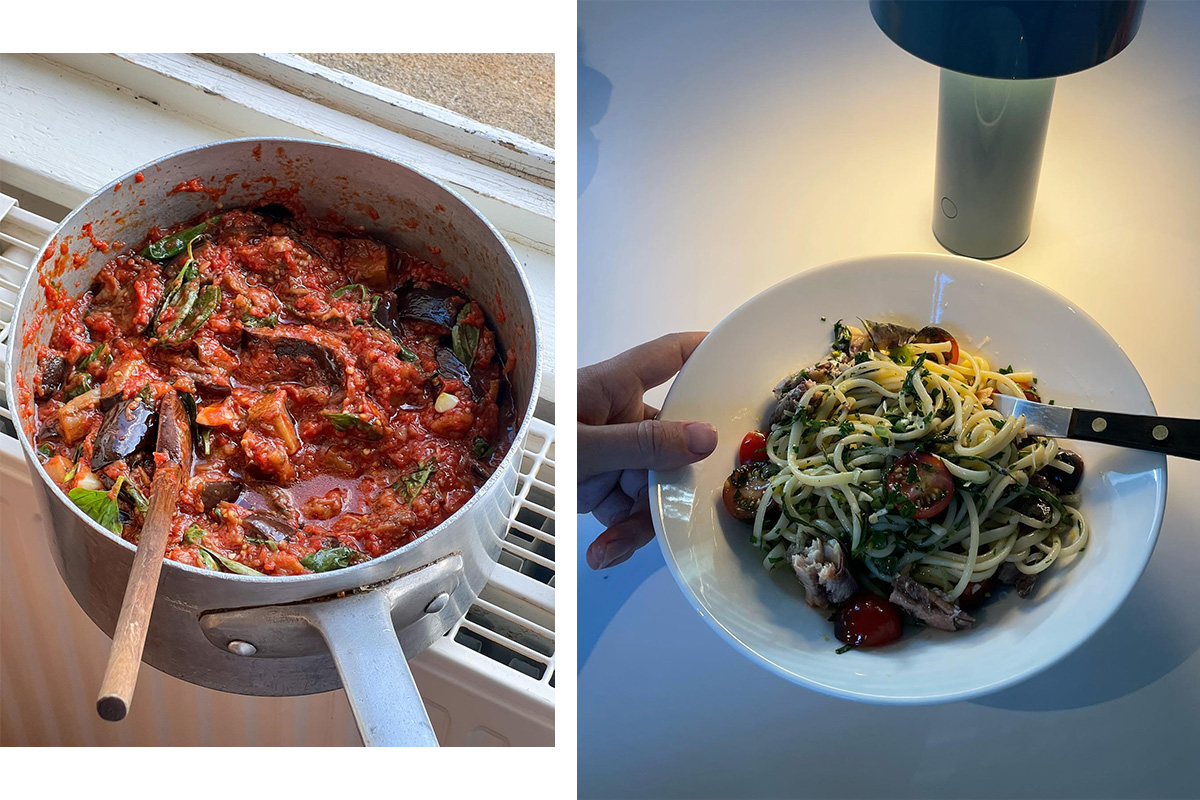
- Cooking something that takes hours
- Feeding yourself food you love most with both hands, may I recommend a fresh, juicy peach? It’s what Timothee Chalamet would have wanted.
- Handwriting letters or notes
- Swimming, floating, bathing - being held by water
- Gardening, touching soil, smelling flowers
- Listening to a full album without multitasking (I recommend Rosalía’s new masterpiece Lux, and listening in the dark, as she advises)
These moments return us to a rhythm that predates algorithms, one where attention isn’t constantly pulled and stretched into flimsy strands. Don’t let your mind become a dumpling soup of overwhelm.
5. Rest as something shared (but un-performative)
A world that normalises burnout also elevates the cult of the individual over community. Even though community is what sustains us, what allows us to do hard things.
As communal spaces disappear and the cost‑of‑living crisis deepens, it becomes harder to seek solace in one another. Burnout isolates us. We’re too exhausted to change our circumstances. Productivity culture makes rest feel private and shameful.
Gently resist this.
Relearn collective unwinding:
- Sit with someone without an agenda
- Share meals and long lunches that linger (without stressing about how they happen)
- Go for long walks with friends as your catch ups
- Be quiet together without filling the silence
- Go on swimming dates where everyone brings a book to read between swims
- Walk around your neighbourhood and get to know local shop owners, or try exploring the neighbourhoods nearby.
No networking. No emotional labour. No clout. No self‑improvement conversations. Just living your one wild and precious life.
6. Stop treating exhaustion as a personal failure
You are not tired because you are weak.
You are tired because the system:
- Rewards overwork
- Punishes slowness
- Financialises surviva
- Never turns off
Rest is not something you need to get better at. It is something the world has made deliberately difficult.Release the self‑blame. It is not yours to carry. Instead, try making an anti‑list. Don’t write what’s useful. Write what you notice. What you’re good at. What calms you. What makes you happy. Hand‑journalling, letting ink soak into paper, has a way of quieting the mind.
7. Build a daily ritual of nothingness
Not a routine, but a ritual. A sacred slice of the day where:
- Nothing is produced
- Nothing is consumed
- Nothing is improved
Even ten minutes is enough. Treat it as a sanctuary.
Sit. Lie down. Breathe. Daydream. Stare out the window.
Let boredom become a gateway your imagination can wander through. There’s no rush. Nowhere to be.
If it helps, picture a place where you feel most at peace: swimming all day at the beach, showering the salt away, skin still warm from the sun, getting dressed for dinner with friends at a place you love. Let the image soften you. Let the guardrails down. Then, where you can, find ways to make it real.
“There may indeed be something dangerous about something as pedestrian as doing nothing… escaping laterally toward each other, we might find that everything we wanted is already here.”
— Jenny Odell, How to Do Nothing
The most radical form of relaxation may be allowing yourself to be utterly unremarkable.
Just a body in the sea, floating, floating, toward freedom.