In my share house, food was our religion.
Time spent chopping and frying in our kitchen was time spent worshipping at the church of self-love. And like many, we turned to cooking as a source of comfort over the pandemic and its subsequent years; sharing our culinary endeavours on social media, prowling Bon Appetit for our next household meal. To many a starry-eyed Instagram commenter I replied, “Food is the one of the few pleasures we have left!”.
We started small. A little rock salt, a little goat’s cheese. We worked our hands around homemade pasta dough and freshly pinched gyozas. We weren’t game enough to tackle the sourdough loaf, but many crisp focaccias were made. Our housemate Jack changed our lives with a bowl of smoked pancetta bolognese. Rich, turmeric fish curries slipped into heavy rotation. And then, there was that brief-yet-all-consuming homemade ramen phase.
In the warmth of long autumn afternoons on our front verandah, we debated the merits of vegetarianism, of the garlic bread at our local Dominos, of how a Pet Nat is made and what makes one so good. And the rest of the world seemed to fall away. Our sense of connection to the outside world dissipated, but I was reminded three times a day how much I missed shared love-ins over a dining room table – and how distant the concept of communal cutlery and close seating felt.
View this post on Instagram
Food had been our solace throughout lockdown; a hobby my housemates and I had half-jokingly labelled our “emotional coping mechanism”. For us, it was the ultimate healer, and a seemingly effortless conduit for connection and conversation. A well-cooked meal could re-inspire the possibility of little miracles – so could it also serve as a means to navigate these strange and melancholic times?
One of my favourite food writers, Adam Gopnik, wrote in his book The Table Comes First, “Eating, once again, is a social act before it is a purely sensory one; it calls on our moral taste more than our measuring tongue”. And for much of my life, this sentiment has rung true.
"A well-cooked meal could re-inspire the possibility of little miracles – so could it also serve as a means to navigate these strange and melancholic times?"
I was raised in a household where eating dinner together as a family was an immoveable pillar that upheld our days. Phones were never present, and TV dinners were a special occasion (usually reserved for a Friday night when we’d swing past our local Blockbuster). But today, the tradition of gathering for dinner as a household has quietly eroded.
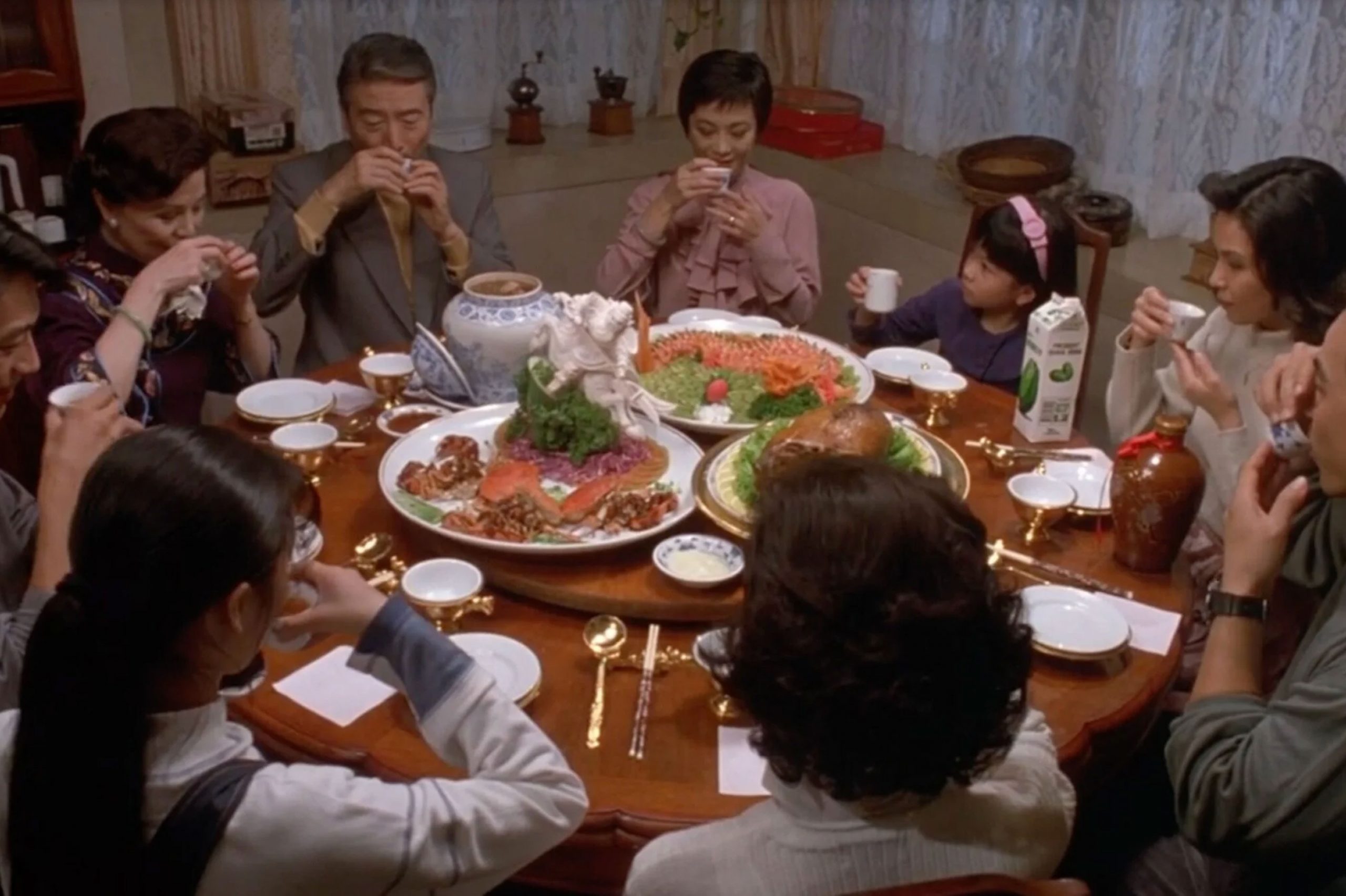
Once a near-universal practice, now HelloFresh's State of Dinnertime Report has found that fewer than half of Australian families (34 per cent to be exact) are sitting down together most nights of the week. According to their ‘State of Dinnertime’ report, busy schedules, after-hours work, and the lure of screens are pulling people in different directions. And in its absence, the subtle rituals that bind us through food – passing plates, pausing to ask about someone’s day, the unspoken comfort of eating side by side – are slipping away. Plates are now balanced on laps, phones aglow nearby.
Researchers warn that this decline is not just about changing domestic routines, but feeding into a broader epidemic of disconnection. “When families stop eating together, one of the most reliable daily touchpoints for connection vanishes and can increase feelings of loneliness, especially for children and teens,” Dr Michael Carr-Gregg, one of Australia’s leading psychologists who is working with HelloFresh, tells me. “Sharing food is about so much more than nutrition. It’s a daily dose of joy, presence, and togetherness served around the table.”
"The subtle rituals that bind us through food – passing plates, pausing to ask about someone’s day, the unspoken comfort of eating side by side – are slipping away. Plates are now balanced on laps, phones aglow nearby."
In Australia, the University of Sydney reports more than 40 percent of young people now report feeling lonely, and those who lack consistent opportunities to share meals or social spaces are more likely to experience long-term psychological distress. “We rely on those moments to catch up and share, as well as bringing moments of laughter and joy into our homes,” continues Carr-Gregg. “We lose the chance to process the day’s stresses in a safe environment, which is critical for resilience. They also miss out on building the micro-connections, like what evolves when families cook and enjoy a meal together, that buffer against anxiety and depression.”
Right now, we’re seeing loneliness, once dismissed as a passing emotion, increasingly recognised as a public health concern, linked not only to mental health struggles but even to physical conditions like vascular dysfunction in young adults. And without spaces to regularly gather around food – whether as families, friends, or communities – we risk losing one of our oldest and simplest tools for belonging.
Eating has always been a communal act; one intricately woven into our memories, emotions and identity. “We recall good dinners as happy days,” Gopnik wrote. Even Nigella concurs: “I know I might seem soupy when I say that I see every mealtime, every mouthful, as a celebration of life, but (with some lamentable exceptions) I do, or I try to. It’s such a waste otherwise.”
"In Australia, more than 40 percent of young people now report feeling lonely, and those who lack consistent opportunities to share meals or social spaces are more likely to experience long-term psychological distress."
Birthday dinners, wedding cakes, even the solemn clink of champagne in toast at a wake. Our most precious milestones, most intimate moments have always been dogeared by the gustatory. I can still remember the exact Oreo ice cream cake I received every year for my childhood birthdays, and the aroma of the dried spindle of Greek oregano that permeates my Mum’s cooking. When I miss my late Grandmother, I yearn for the fluffy, crisp and honey-drenched Sopapillas that punctuated my trips to visit her in New Mexico.
If these memories remind us of what has been lost, they also sharpen the urgency of finding new ways to restore it. Food alone cannot cure loneliness, but the rituals built around it can offer an antidote to fragmentation. To eat together is to resist disconnection, to carve out a space where presence and care are made tangible. And it is precisely this recognition that is inspiring a new wave of people to create opportunities for gathering, determined to re-establish the table as a site of belonging.
"Food alone cannot cure loneliness, but the rituals built around it can offer an antidote to fragmentation. To eat together is to resist disconnection, to carve out a space where presence and care are made tangible."
Among them is Melbourne-based Sophie McIntyre, the founder of Club Sup – a now-nationwide Australian supper club that has recently begun branching out abroad. Since its launch in 2021, McIntyre has championed the idea that food is far more than sustenance: it is a powerful conduit for connection and community.
“I loved cooking for my entire life. Still to this day my first instincts are to cook for someone for anything from new babies, heartbreaks or promotions,” McIntyre tells me.
View this post on Instagram
“There is an immense power in a shared meal, more than we give it credit for,” she continues. “When I started the club I made an active choice to not serve our tables individual meals. We don't ever serve individual meals except for dessert (because you shouldn't have to share dessert), because there’s a certain level of care that is required when you're sharing a meal. You have to make sure everyone has enough potatoes and enough of the main dish.”
"There’s a certain level of care that is required when you're sharing a meal. You have to make sure everyone has enough potatoes and enough of the main dish."
McIntyre has spent the last few years first-hand experiencing the ability of food to remedy. “A meal has such power to neutralise everyone from any emotion. From sadness, heartbreak, boredom,” she says. “It also has the power to be the perfect conversation starter, it can be unifying or divisive – some people hate anchovies, some people love coriander. All these little things make up the parts of who someone is and that's the best way to get to know a stranger.”
But maybe that is precisely why food carries such power: it endures where other rituals fall away. Even as the demands of modern life scatter us across cities, devices, and endless obligations, a shared meal can pull us back into alignment. It reminds us that care does not always need grand gestures. Sometimes it’s as small as refilling someone’s glass without being asked, or silently passing the butter to the person across the table. These ordinary acts become the language of belonging.
"A shared meal can pull us back into alignment. It reminds us that care does not always need grand gestures. Sometimes it’s as small as refilling someone’s glass without being asked, or silently passing the butter to the person across the table."
And in this language, food transmutes loneliness into communion. To sit across from someone, to chew and sip in time with them. No matter how fractured the world outside feels, the table creates a temporary circle of safety and recognition. It is our oldest tool for weaving together the threads of family, friendship, and community.
For my housemates and I, we began to find our way back to each other through food. Transitioning into new phases of life by the dinner table. Whether a global lockdown or a simple heartbreak, no matter how melancholic, sitting around a table with a glass of wine and a full belly is a difficult place for those feelings to last.