
Amid a darkening political climate and an onslaught of horrifying headlines, communities on the front line of global climate action report fear, devastation – and more energy than ever before.
For those who have been paying attention, climate news in recent months has felt like an increasingly anxious montage. Eerie messages of impending doom scattered below headlines on news websites and across social media feeds. One recent assessment of climate impacts painted a terrifying picture of cascading, life-threatening disasters in Australia in decades to come. Another report claimed the world has reached its first major climate tipping point with the quiet, bone-white death of warm-water coral reefs. Carbon dioxide levels in the atmosphere last year were found to have leapt to record highs. However, while the symptoms of the climate crisis, drip fed through news, may be nothing new, the world that’s receiving these messages feels strikingly different in ways.
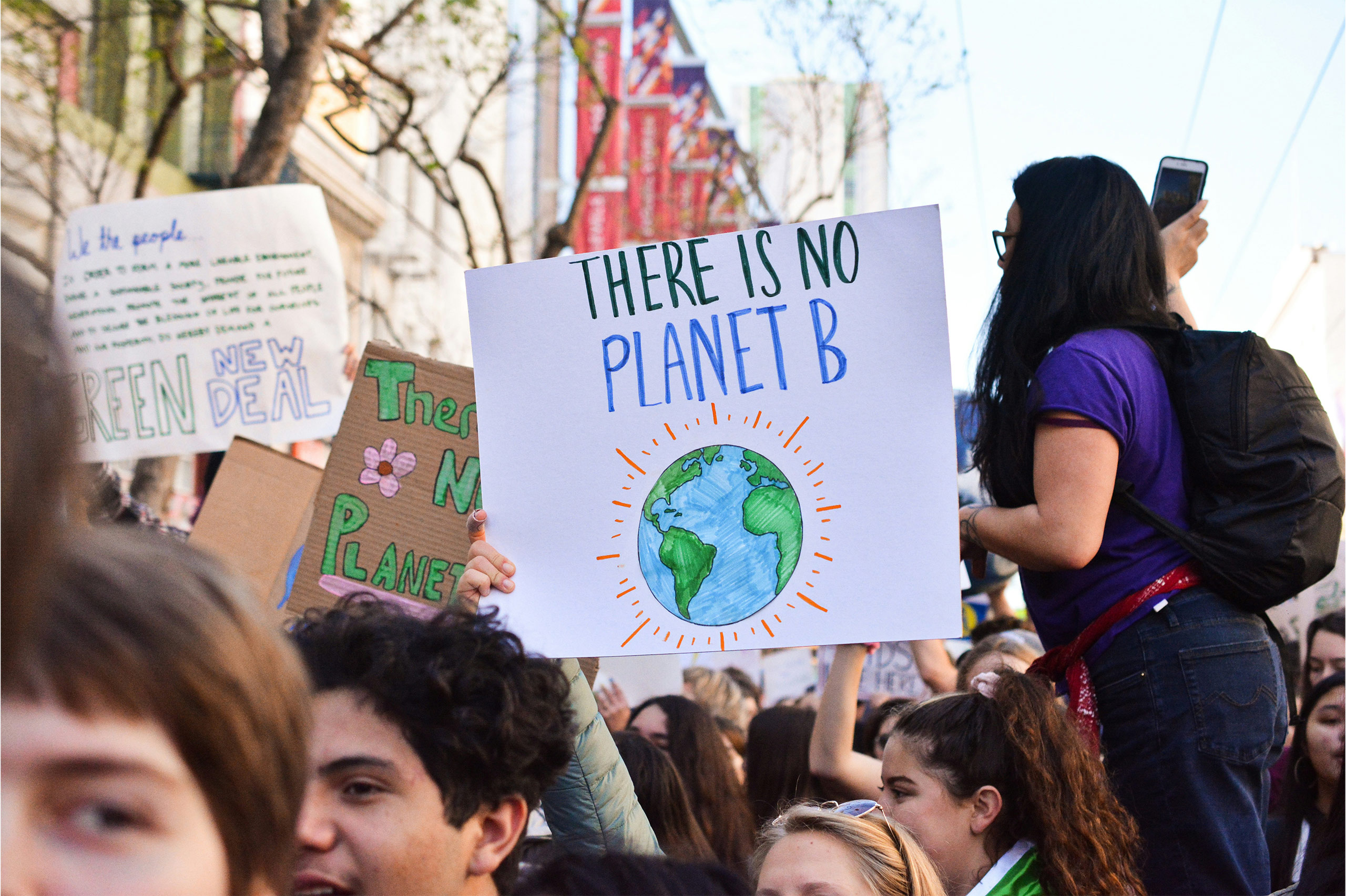
Six years ago, a movement led largely by a coalition of students bore colourful signs and dominated cities to rally in the wake of stories like these. Now? The world feels irrevocably altered. A global pandemic, competing existential crises and the sinister spread of right-wing populism have exhausted so many of us, rendering us either too shell-shocked or cynical to engage with something so painful.
So, where does that leave climate action?
Early one Saturday morning, I sit on a crackling video call with Phillip Eubanks, Deputy Director of the Climate Emergency Fund, a US non-profit that syphons funds into disruptive protests. The group resources agitators and political thorns across the country with the theory that non-violent protest movements – the ones that gather hundreds or thousands of people to block streets, swamp corporate buildings and throw paint – are the ones that dominate headlines and jolt the Overton window towards climate action.
"A global pandemic, competing existential crises and the sinister spread of right-wing populism have exhausted so many of us, rendering us either too shell-shocked or cynical to engage with something so painful."
Eubanks’ own path towards working in the climate movement was cemented in a boardroom one day in 2023. That day, Eubanks describes the feeling of a faltering world, as New York City was plunged into an orange haze, choking on the smoke of Canadian wildfires that rushed across more land than had ever been claimed before. He was trapped in a meeting with press leaders from across the US, who seemed largely unphased by the scenes unfolding on the other side of the boardroom windows. While they acknowledged the value of the story of climate, Eubanks felt a deep unease with their lack of urgency.
Overwhelmed by an inescapable sense of rising panic, Eubanks left the meeting to rush out onto the streets – only to be hit by a wall of boiling air, tainted with the smell of burning forests. “It felt apocalyptic,” he recalls. “I guess the word I would use is ‘grief’.”
Since starting work with the Climate Emergency Fund, Eubanks says he’s seen the tangible impacts that have proved the power of disruptive protest. The reverberations of some comically small acts of nuisance have catalysed marked successes. In the summer of 2022, a small group of protestors spent weeks devoted to pestering Joe Manchin, a US Senator who opposed then-President Joe Biden’s Inflation Reduction Act, which was set to allocate hundreds of billions of dollars to clean energy investment. They followed him around like his own personal circus, surrounding his Maserati and houseboat.
“They made him the least popular politician in the United States in the summer of 2022,” Eubanks says – ultimately forcing Manchin to provide the key vote that passed the bill. They’ve also claimed groundbreaking wins in smaller communities. One group of kayaking protestors known as the Rich City Rays put the screws on by mobilising residents of the Californian town Richmond against Chevron, one of the most powerful companies in the world, across two port blockades.
In August of last year, Chevron agreed to pay the city an $846 million settlement for the pollution and respiratory distress the fossil fuel giant had inflicted on its people. Only now, Eubanks recognises the feeling has changed. “I'm not going to sugarcoat it. It's a bleak situation. There's a lot of fear. There's a lot of worry.” The reelection of US President Donald Trump sent shockwaves through the global climate community and in the year since, the world has witnessed the gains of radical right-wing parties emboldened by his victory. There is little illusion about the place of climate in the eyes of these political movements.
A year on, Trump has proved himself as a leader with an authoritarian agenda who rapidly did everything within his power to decimate policies for clean air, water and climate action in his first months in office. The fossil fuel industry globally has also felt the vote of confidence from a superpower endorsing more extraction and expansion.
"Often, the most compelling part about interviewing prominent climate advocates and activists is not so much discovering they are people who have chosen to hope but realising they are people who believe they have no choice but to hope."
This year, Trump referred to climate change as the “greatest con job ever perpetrated on the world” in his speech at the United Nations General Assembly. In the US, climate activists report a growing sense of fear of persecution. Arielle Gamble, co-founder and CEO of Groundswell, a collective raising and moving funds into Australian grassroots climate action, says she’s felt the tangible tension among a reeling climate community in the US. Brutal raids conducted by masked Immigration and Customs Enforcement (ICE) officials have left marginalised members of the community terrified for the safety of themselves and their families.
Claims of ‘left-wing terrorism’ has raised the hackles of all activists acting in ideological opposition to the Trump administration – leading organisations working across democracy, voting rights, climate justice, racial justice and Palestinian rights to feel a growing possibility of imminent assault. Gamble, who had recently returned from hosting an event at New York Climate Week when I spoke to her, says she had a number of uneasy conversations with climate activists. One prominent climate leader, a Black woman, said she had taken to tracking her husband and children’s movements on her phone.
“I went over there expecting it to be boiling point, but in a way it was kind of the opposite. It was people really scared about being targeted and trying not to make themselves targets, and that was really frightening in a whole other way.”
Here in Australia – and in other nations around the world – the increasing criminalisation of environmental protest movements has repressed non-violent disruptive protest in such a way that the joyful outbursts of dissidence, the front-page photographs of people in costumes blocking traffic, music and banners feel almost like a relic of the past. Despite this – in the pits of a growing darkness – there have been some remarkable glimmers.
One evening in late July, Australian climate advocates and journalists alike spent an evening anxiously refreshing a page on the website of the world’s highest court: the International Court of Justice (ICJ). A campaign launched six years ago by 27 law students from the Pacific had led the ICJ to clarify the legal obligations countries have to protect the Earth’s climate system for current and future generations. And then suddenly, there it was: a unanimous decision declaring that all countries have an obligation to act to prevent climate change and that failing to do so could be a breach of international law.
It was a groundbreaking moment with profound implications that breathed relief and joy into so many. It also sharpened the teeth for climate litigation around the world. Gamble says that while the vibe of climate action may have shifted globally – the strength and resilience of the global activist community is also still being proved and spreading those skills across multiple crises. Where a nascent global climate movement was once defined by plucky defiance, activists from various climate, pro-democracy and humanitarian movements are coalescing in hard-nosed resistance.
“When new existential threats appear, you’re seeing that organising power moving to mutual aid and intersecting challenges and looking at supporting resistance to fascism, integrity and democracy,” she says. The day after I speak to Eubanks in California, the No Kings protests against government corruption and authoritarianism in the US brought approximately 7 million people together in demonstrations across the country. He says in the face of the horror, he’s seeing “more energy at the grassroots level than I have ever seen before” and the connection between democracy and climate action is clearly drawn.
“Yes, there’s fear. But there is definitely a willingness to push back as well.”
On the other side of the world, in a group of nations least responsible for climate change but bearing the brunt of its force, another advocate continues to push back. Shiva Gounden, Head of Pacific at Greenpeace, grew up in a remote community in the hills of Fiji and is well-acquainted with the threat to land, culture, and lives caused by climate change. He recalls the compounded destruction he witnessed in neighbouring island nation Vanuatu after Cyclones Judy and Kevin swept across the country in early 2023 (he remembers pulling his bodyweight against his front door for 10 hours to prevent it from being ripped off its hinges by rushing winds). The devastation climate change has on Pacific nations through these violent storms and rising ocean waters is already forcing communities to abandon their homes.
“It’s not just the physical things that you see – there’s losses and damages that happen that you can never get back. You’ve got generations that lose their connection to the spiritual land, to their culture, to their languages,” he says. Gounden says he is proud of seeing what the Pacific community accomplished at the ICJ and now feels an indelible sense of duty to continue the work for his home.
"The devastation climate change has on Pacific nations through these violent storms and rising ocean waters is already forcing communities to abandon their homes."
In November, he’ll be heading to COP30, the United Nation’s climate change conference in Brazil, to advocate for stronger climate commitments. While the rumble of cynicism around the efficacy of COPs has grown in recent years, Gounden says even the “frustratingly slow” process of the multilateral agreements is unique in that it sets the pace and standards for a whole globe.
Often, the most compelling part about interviewing prominent climate advocates and activists is not so much discovering they are people who have chosen to hope but realising they are people who believe they have no choice but to hope.
But beyond rooms of plodding negotiations of politicians and diplomats, Gounden sees a thriving world of global climate activism and believes those who feel the loss, anguish, and fear of climate change now need – more than ever – to find and build communities, resilience and resistance with one another.
For him, a global community of continued protesting and advocacy – regardless of how slow progress may be – will always be a beacon. It sounds simple but the binding force of advocates like Eubanks, Gamble and Gounden is an unshakeable belief in people and what can be achieved through the sheer, brute force of the collective.
Gounden makes this plea.
“Stand up together. Stand up with the school children. Stand with Indigenous and First Nations communities. With industries that are acting ethically. Stand with the progressive governments and the international courts and push your leaders,” he says.
“Because that’s the only way we can address climate change in a just and ethical way – and it can only happen with a unified community.”