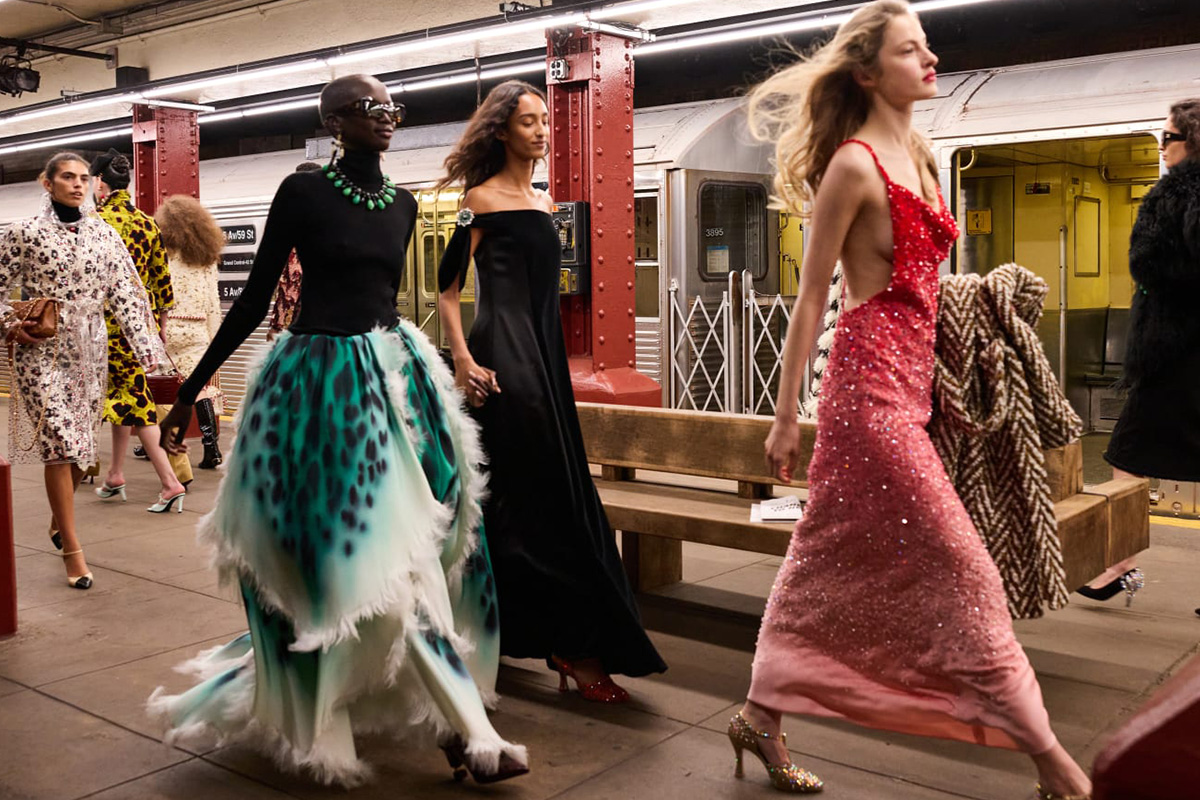
For his debut Métiers d’Art collection, Matthieu Blazy chose a setting that, at first glance, might feel somewhat at odds with a luxury French fashion House: the New York subway. Delve a little deeper, however, and you'll find that it was a very deliberate choice. It's a place where everyone crosses paths, where style is democratic, and where the ordinary can suddenly look extraordinary.
The idea of the subway as a great leveller shaped the entire 2026 Métiers d’Art show: a microcosm of New York, constantly in flux, full of chance encounters, and the possibility of who you might meet next. Chanel’s own “sub(way)-culture,” as the notes called it, are where the ordinary became extraordinary with the help of the Maisons d’art.
Blazy calls it a space of “enigmatic yet wonderful encounters,” which became the backbone of the 2026 Métiers d’Art narrative. The runway unfolded with a list of New York archetypes — from teenagers to socialites, working women, showgirls, ladies-who-lunch, mothers-on-the-go, and even Coco Chanel herself. And a cast of models including Julia Nobis, Alex Consani, Hanne Gabby, Missy Rayder and rising Australian star Libby Taverner brought these characters to life.
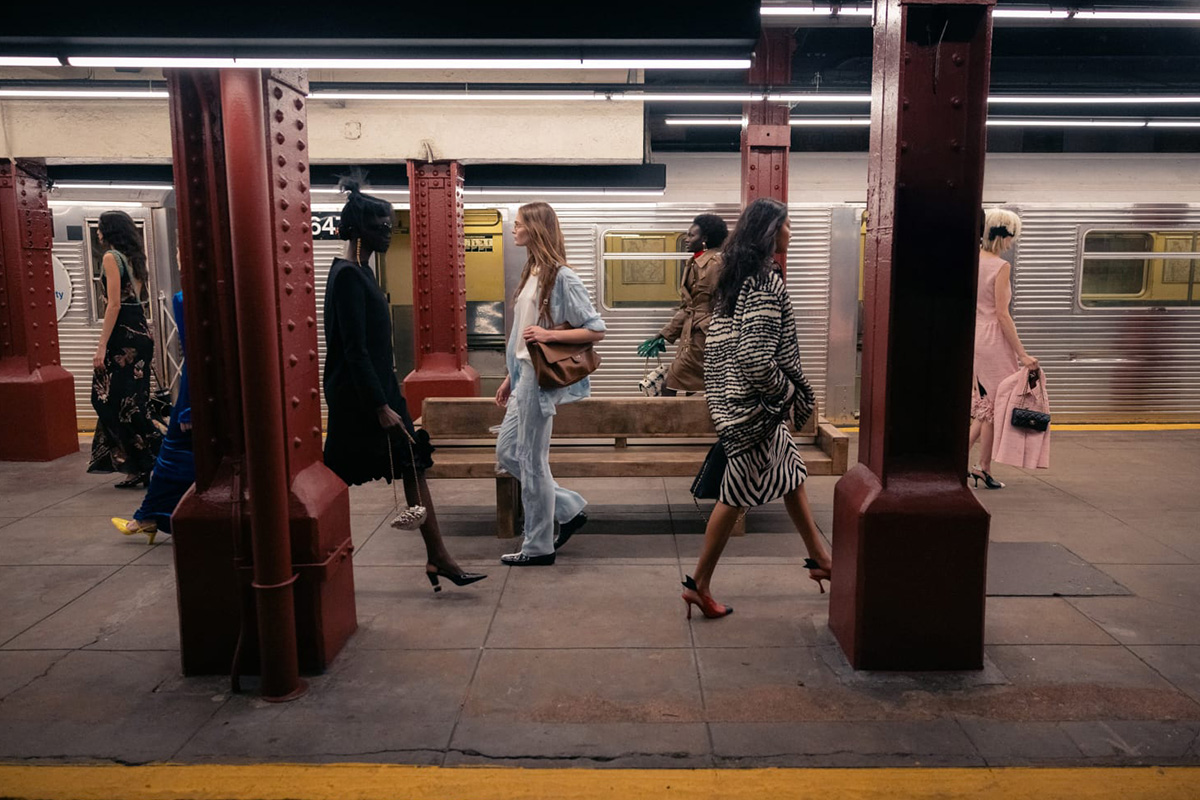
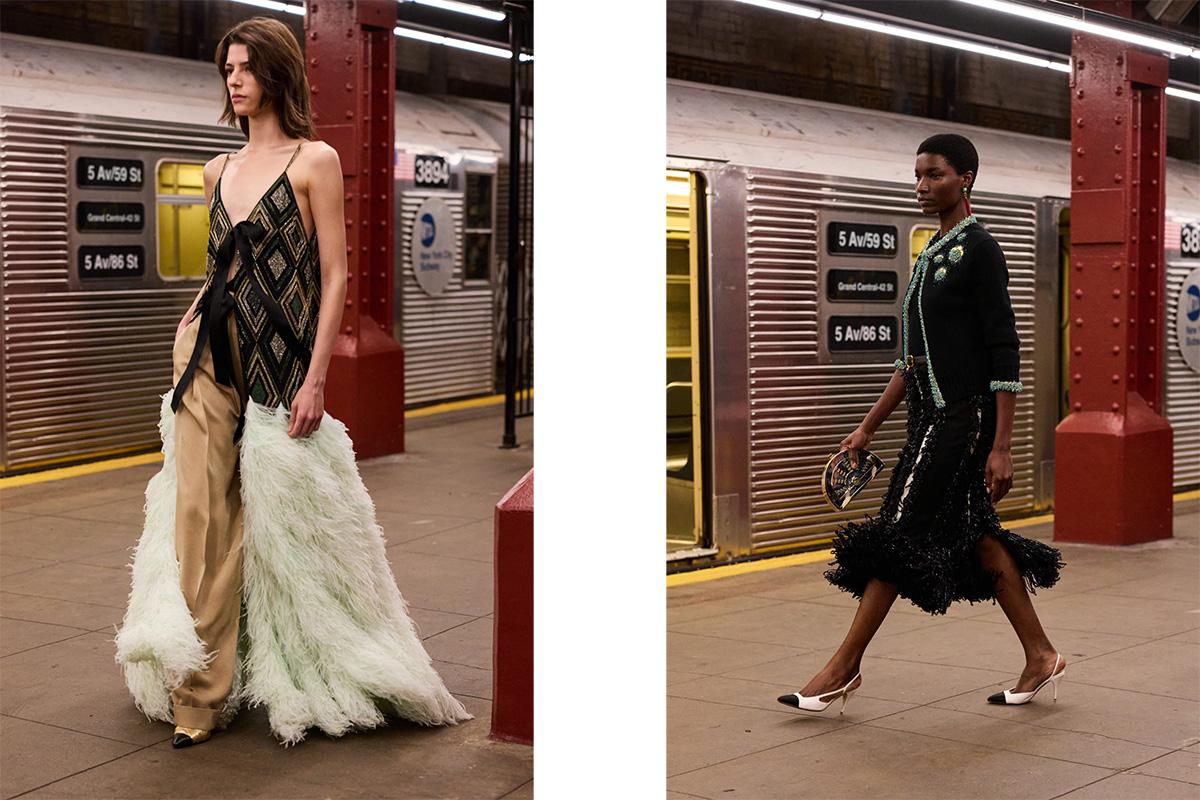
The collection itself moved freely through different decades, slipping from the 1920s to the 2020s with ease. Art Deco silhouettes mingled with modern street style, from classic Chanel skirt suits to perfectly baggy denim. The effect was a reminder that fashion, like the subway, is always moving somewhere — and that Chanel is most alive when it joins this forward motion.
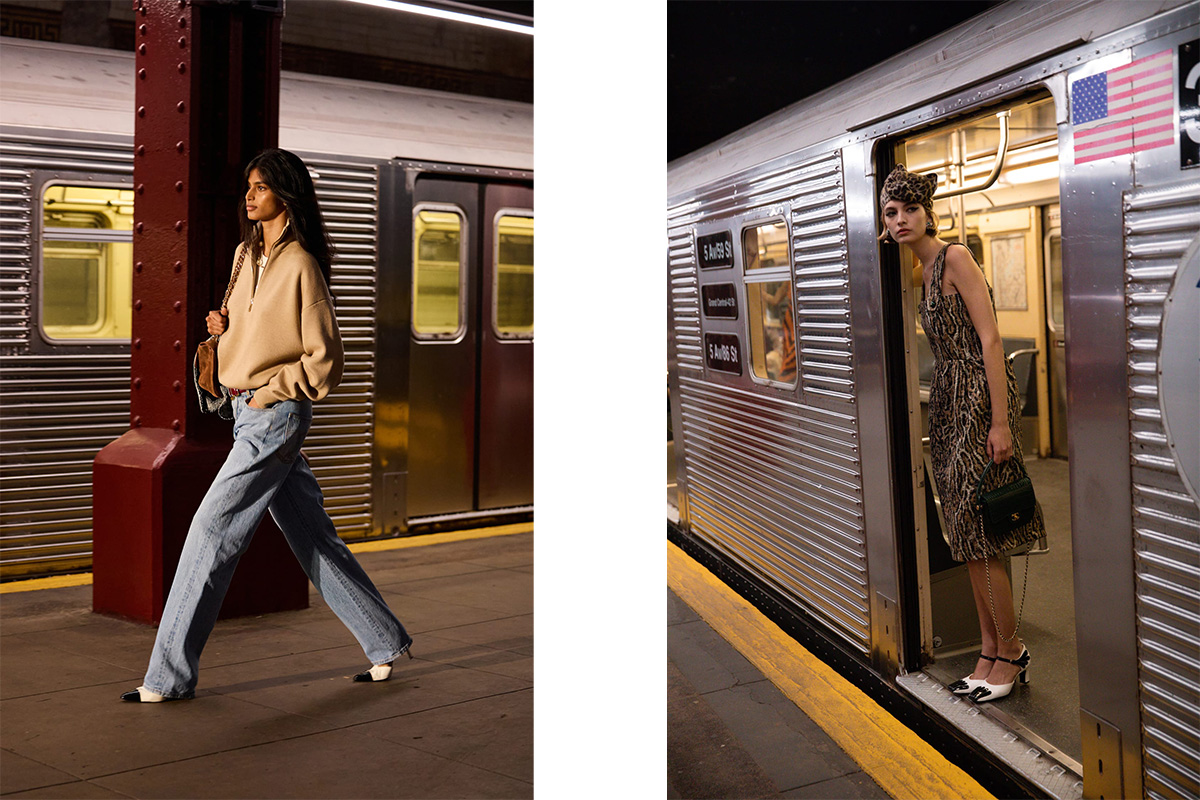
The craft at the heart of Métiers d’Art was, as always, ever-present. An archival Art Deco dress was reconfigured by Lesage and finished with fringed feather work from Lemarié. “Lingerie denim,” embellished with complex embroidery, gave rise to a new sort of Western wear. A men’s flannel shirt was reinterpreted in a sumptuous wool boucle. Everywhere, there were what Blazy called “playful mutations” — pieces that felt familiar but were subtly and cleverly transformed for now.
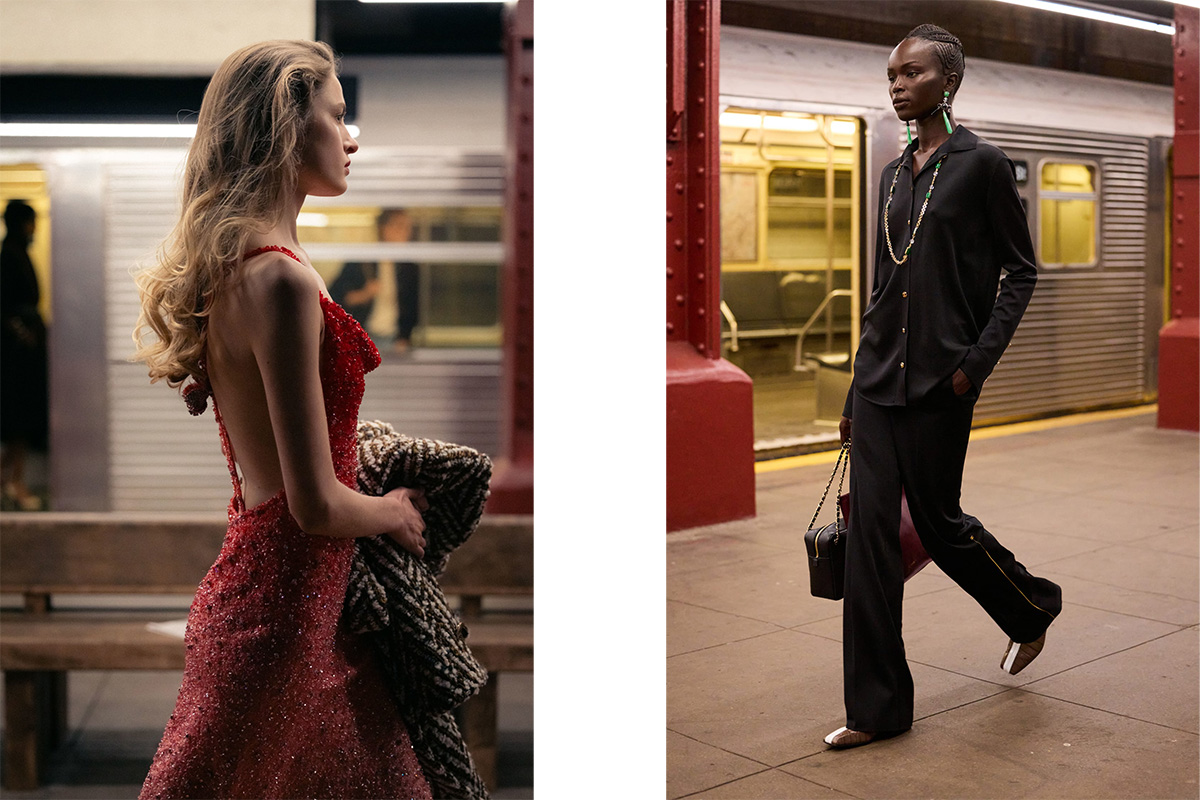
Threaded through each piece was a nod to Gabrielle Chanel’s own history with New York. In 1931, travelling between Paris and Hollywood, she found unexpected inspiration downtown, where women had made Chanel their own. That democratic embrace — the idea that Chanel belongs not only in couture salons but also on subway platforms — resurfaced here with clarity.