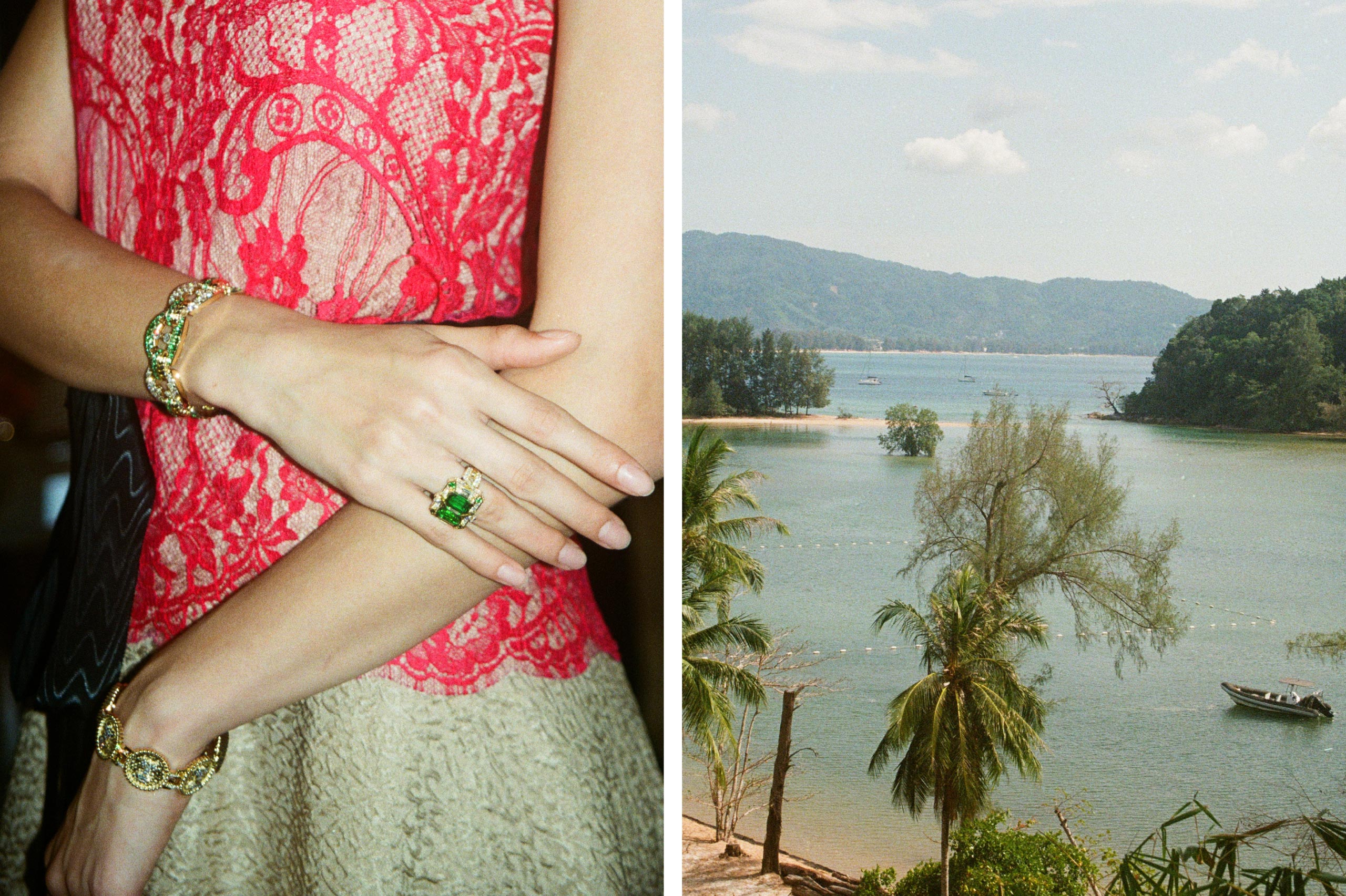
When I arrived in Phuket this past February, the air hung heavy with warmth; the kind that makes time feel slower, more decadent. The Andaman Sea glittered in shifting shades of turquoise and emerald, and the palms swayed as though they too were part of the spectacle. It was here that Van Cleef & Arpels staged the next celebration of its latest High Jewellery collection, Treasure Island, an ode to Robert Louis Stevenson’s 1883 adventure novel. The setting felt almost preordained – a tropical island infused with myth, nature, and the dream of discovery.
The collection unspools like a story told in three breaths – adventure at sea, exploration of the island, and the treasure hunt. In the first, sailor’s knots, rigging and currents become sculptural codes; in the second, palms, shells and gentle creatures are translated into a language of light; and in the third, maps, seals and chests channel the thrill of discovery. I moved through these worlds as though crossing a shoreline: diamonds reading as foam, sapphires as deep water, emeralds as shade. “It’s the universality of the theme,” Julie Clody-Medina, president of Van Cleef & Arpels Asia-Pacific told me. “Deep inside, we are still children… The joyful side of adventure, with this thin line – not falling into caricature or cartoon – but always subtle, always refined, precious, elegant, with a touch of humour. That’s what makes us stand apart, while still being so Van Cleef & Arpels.”
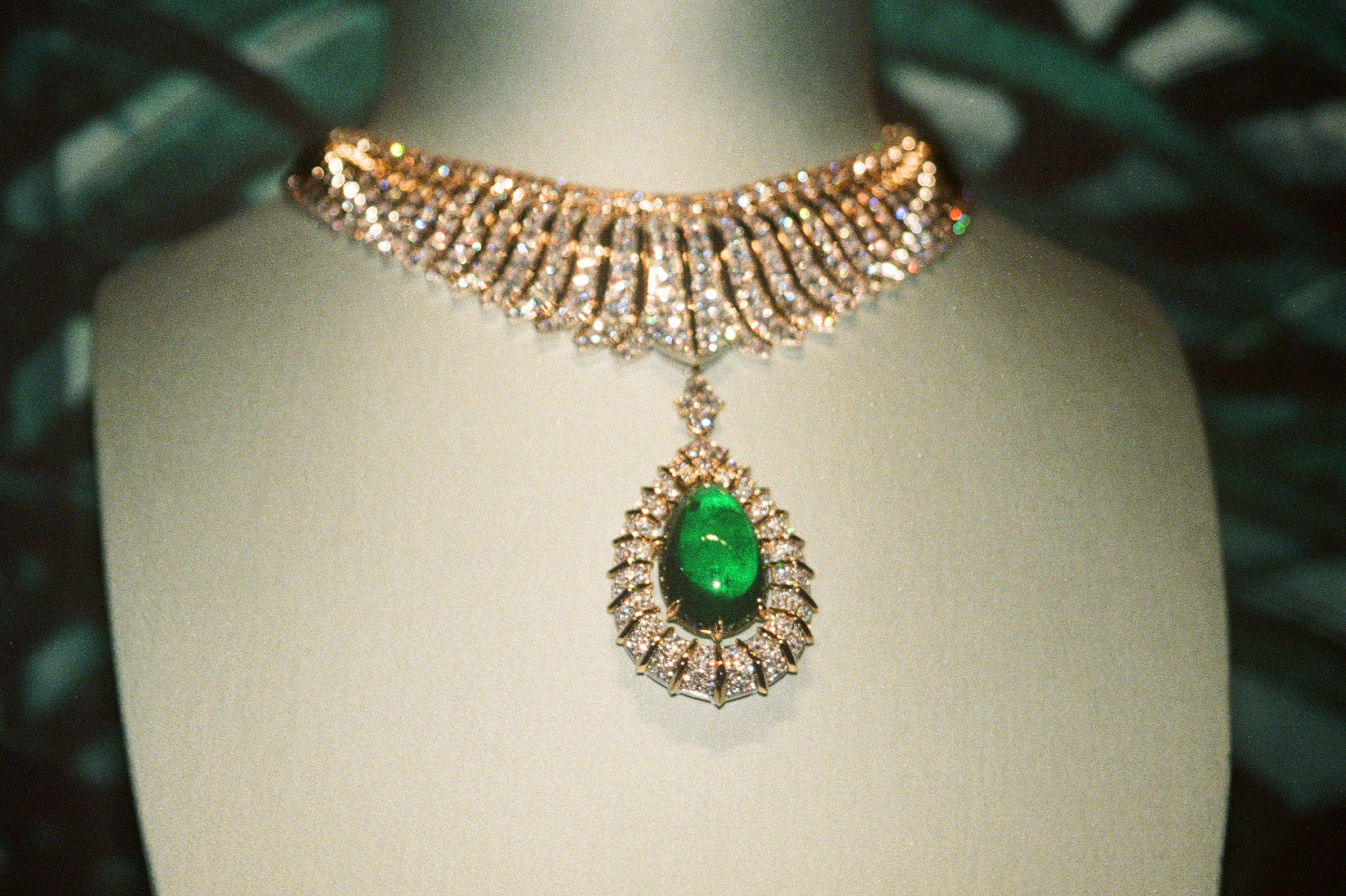
What lingered, too, was the patience embedded in each jewel. The Maison’s treasure begins long before a piece reaches a workshop bench. “Some of the gems were sourced four years in advance, with this theme in mind,” Clody-Medina said. “It’s a treasure hunt in itself. We keep them aside until the right design emerges.”
You feel that deliberateness in the way stones seem destined for their settings – the narrative choosing the gem as much as the gem shapes the narrative.
Craftsmanship, here, is a form of storytelling. The storied Mystery Set – patented in 1933 – appears in new expressions that feel airy, kinetic, almost tidal. “Of course you will find the mystery-setting technique,” Clody-Medina explained. “It exists since 1933 but it’s constantly evolving… translating rigid, very hard material into something that looks so easy, but it’s so not easy to make.”
There is transformability woven through the collection – objects with more than one life, ready to be composed like verses. “A beautiful pendant can become a clip,” she said. “It’s a piece of art that is wearable, wearable in different options – and this is very Van Cleef & Arpels.”
She spoke, too, about the pieces that push technique to its limit. “We have eight creations in the collection with mystery setting, and we have two Vitrail Mystery Setting… there is absolutely no visible setting on a transparent, translucent stone,” she said, describing a leaf and a wave with a near-liquid gradation. “One of the prides is this colour harmonisation… the thin line of subtlety of colour association through the volume, through the gradation. This is highly technical.”
In person, those transitions felt like breath – tones sliding from sea-blue to violet, from lagoon to dusk.
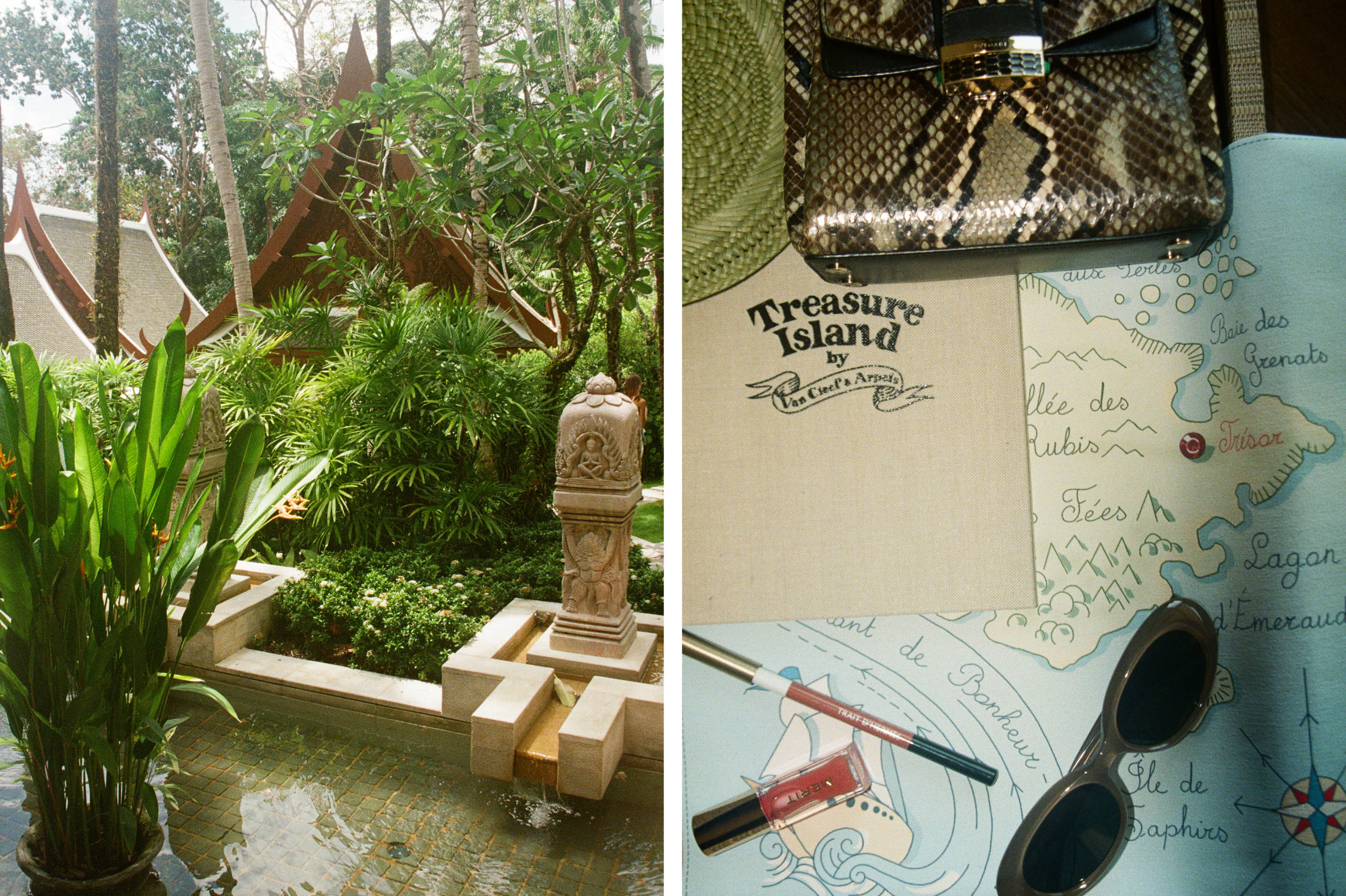
As we spoke, Clody-Medina kept circling back to wearability: beauty resolved into comfort. “The technique is at the service of functionality and wearability,” she said. It sounds pragmatic until you pick up a jewel and feel how naturally it sits, how lightly it moves, how easily it changes form. Then the pragmatism dissolves into poetry. “The pieces by themselves are not that big,” she reflected. “There is this love at first sight… and then you have the layering of understanding – the technique, the craftsmanship, the collective work to come up to that achievement… It’s endless.”
It is also, as she put it, a reminder that high jewellery belongs in the history of art: “a constant dance… between the past and the future, in flawless harmony, and with this dimension of poetry.”
Context threaded through the days, reminding us that treasure has always been a mirror of culture as much as a measure of wealth. We heard of cabinets and caskets across centuries, of shipwrecks heavy with porcelain and gold, of collections assembled and guarded as symbols as well as safeguards – histories that make the modern impulse to gather, protect and adorn feel timeless. Treasure Island sits within that continuum: a contemporary cabinet of curiosities where literature, history and technique meet.
If the daylight made the jewels feel sun-warmed and salt-licked, evening turned them introspective. Under softer light, away from the blunt brightness of midday, diamonds drew out their inner geometry instead of flaring; sapphires deepened to a steadier blue; emeralds cooled. The effect wasn’t fireworks but resonance – tones settling, facets speaking more quietly, like the sea after the last swimmers have gone in. Standing there, I thought of Clody-Medina’s words on colour and gradation, on the thin line that separates exuberance from excess. At night, that line felt perfectly drawn.
I left Thailand without a jewel in my luggage, but with something that felt just as precious: the memory of tracing those gradations with my eyes, of feeling a pendant click into a new life as a clip, of hearing a philosophy of making that privileges time, precision and play in equal measure. Stevenson understood that treasure is as much idea as object; Van Cleef & Arpels understands it, too. The greatest treasures aren’t always buried. Sometimes they are built – stone by stone, story by story – until what you’re holding is not just a jewel, but a journey.